Understanding Programmatic SEO
Programmatic SEO represents a fundamental shift in how we approach content creation at scale. Rather than manually crafting individual pages, this methodology leverages data-driven templates and automation technologies to generate hundreds, thousands, or even millions of SEO-optimized pages. Each page targets specific long-tail keywords while maintaining relevance and providing genuine value to users.

The evolution of this approach has been remarkable. What began as simple database-driven page generation has transformed into sophisticated systems that combine artificial intelligence, natural language processing, and machine learning algorithms to create content that rivals human-written articles. Today's programmatic SEO goes beyond mere keyword insertion, understanding context, user intent, and semantic relationships to deliver truly valuable content.
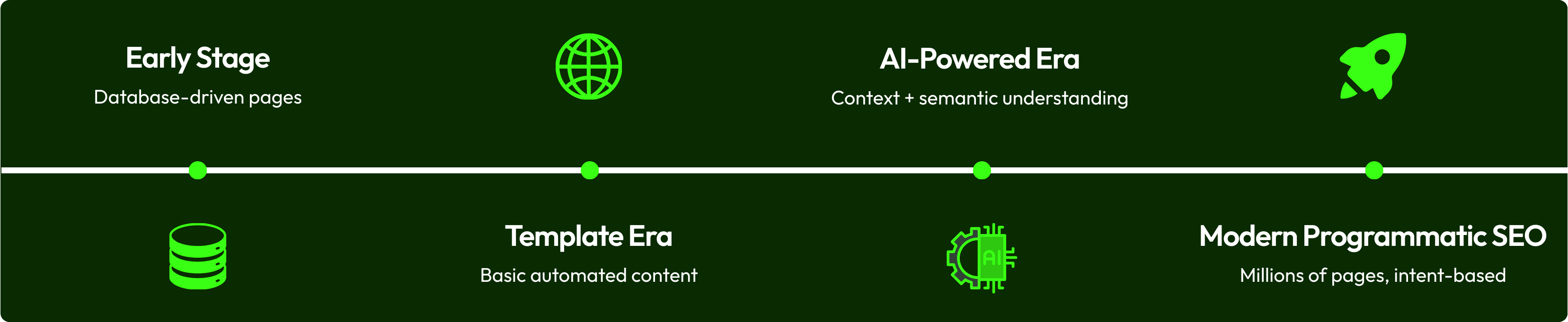
The current landscape shows that programmatic SEO is no longer optional for businesses seeking to compete in crowded digital markets. Companies that master this approach can target millions of search queries simultaneously, capturing traffic across the entire customer journey from awareness to decision-making. This strategic advantage has made programmatic SEO a critical component of modern digital marketing strategies.
The Power of Scale and Automation
The transformative potential of programmatic SEO becomes clear when examining real-world success stories. These companies have leveraged data-driven content creation to achieve extraordinary results, demonstrating that scale and quality can coexist when the right systems are in place.
- Zapier has built an empire on programmatic SEO, ranking for 1.3 million keywords across more than 50,000 pages, attracting 16.2 million monthly visitors. Their integration pages automatically generate content for every possible app combination, creating a massive long-tail keyword net.
- Canva demonstrates even more impressive scale, targeting 500,000+ keywords with over 190,000 pages, resulting in 100+ million monthly visitors. Their template pages for every conceivable design use case exemplify how programmatic content can serve both SEO and user needs simultaneously.
- TripAdvisor pioneered programmatic SEO in the travel industry, creating millions of location-specific pages that now attract 226+ million monthly visitors. Their approach shows how user-generated content can be structured programmatically to maximize search visibility.
- Wise (formerly TransferWise) uses data-driven pages to educate users about currency conversions and international transfers, driving 60+ million monthly visitors through highly targeted, informational content that addresses specific user queries.
These success stories share common threads: they identified scalable keyword patterns, built robust data infrastructures, created flexible templates that maintain quality across thousands of variations, and continuously optimized their systems based on performance data. The results speak for themselves, proving that programmatic approaches can deliver both quantity and quality when executed properly.
AI-Powered Content Creation in 2025
The integration of artificial intelligence into content creation has reached a tipping point in 2025. The statistics reveal a landscape where AI has moved from experimental technology to essential infrastructure for content marketing teams worldwide.
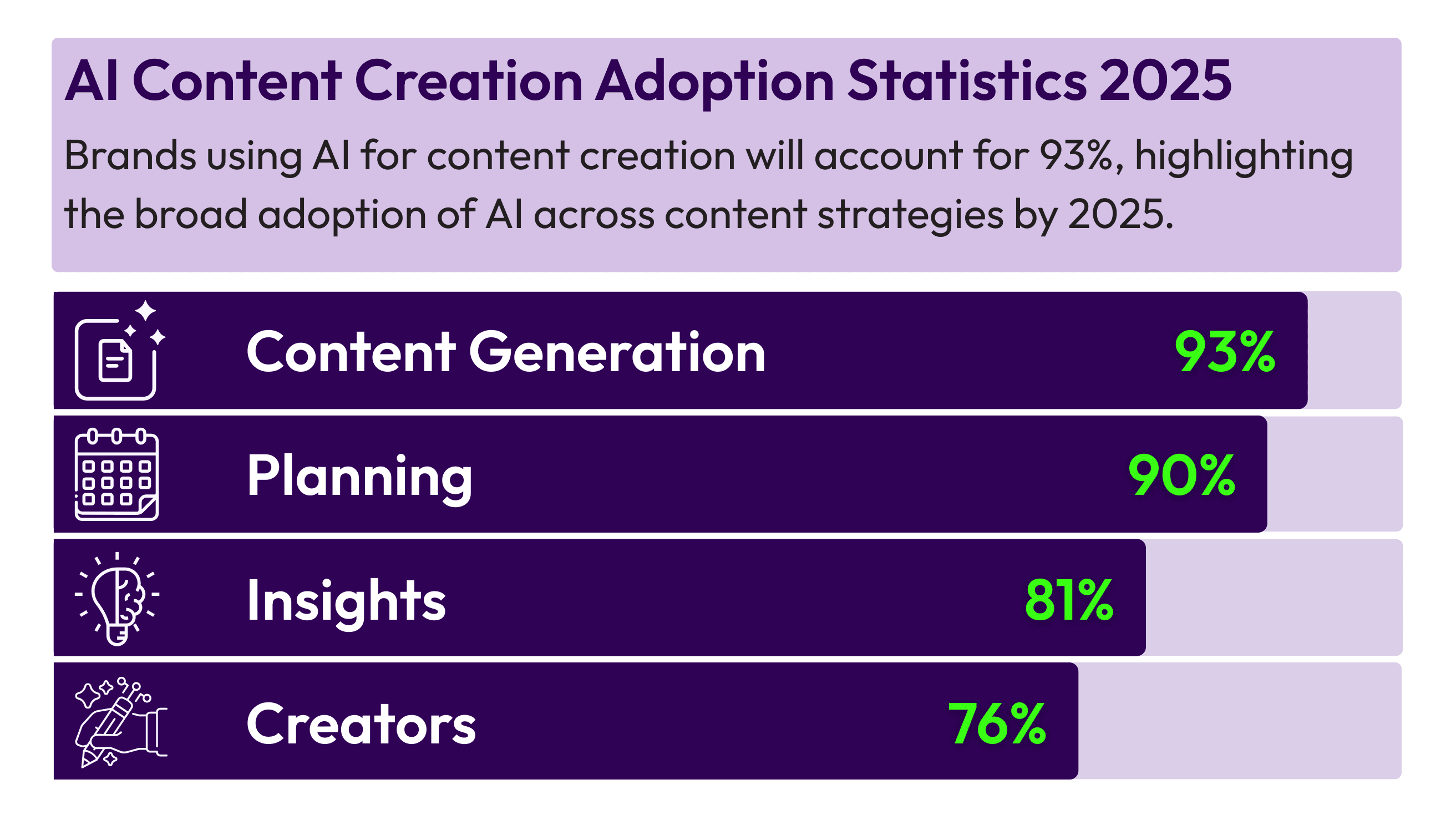 AI content creation adoption statistics for 2025 showing widespread integration.
The data paints a compelling picture: 93% of brands now use AI for content generation, while 90% leverage it for content planning. This isn't just about automation; it's about augmentation. 81% of brands use AI to extract insights from data, enabling more informed strategic decisions. Among content marketers specifically, 71.7% use AI for outlining and 68% for ideation, showing that AI has become integral to every stage of the content creation process.
Perhaps most telling is that 76% of content creators report that AI helps grow their business. This isn't just about efficiency gains; it's about tangible business impact. AI enables creators to maintain consistency across massive content libraries, identify untapped opportunities through data analysis, and personalize content at scale in ways that were previously impossible. The technology has matured to the point where it's not just a productivity tool, but a strategic advantage that directly contributes to revenue growth and market expansion.
Key Components of Success
Successful programmatic SEO implementations rest on three foundational pillars that work in harmony to deliver results. Understanding and optimizing each component is critical for achieving the scale and quality balance that defines best-in-class programmatic systems.
Structured Data Architecture
At the heart of any programmatic SEO system lies a robust data infrastructure. This includes databases that store the core information for each page variation, APIs that can dynamically pull real-time data, and validation systems that ensure data quality before content generation. The data must be comprehensive, accurate, and regularly updated. Poor data quality will cascade through every generated page, undermining the entire system's credibility and effectiveness.
Intelligent Templates
Templates are the scaffolding that transforms raw data into compelling content. Modern programmatic templates go far beyond simple variable insertion. They incorporate conditional logic that adapts content based on data attributes, natural language variation to prevent repetitive phrasing, and SEO optimization rules that ensure each page targets the right keywords while maintaining readability. The best templates feel human-crafted even when generating thousands of variations.
Automation and Quality Control
The automation layer orchestrates the entire system, pulling data, populating templates, generating pages, and publishing content at scale. However, automation without quality control is a recipe for disaster. Successful systems incorporate multi-stage review processes, automated quality checks that flag potential issues, human oversight at critical checkpoints, and continuous monitoring of published content performance. This ensures that scale never comes at the expense of quality.

Strategic Implementation Framework
Launching a successful programmatic SEO initiative requires careful planning and systematic execution. Based on analysis of successful implementations across diverse industries, a proven five-phase framework has emerged that guides organizations from concept to scale.
- Research & Planning: Begin by identifying scalable keyword patterns that align with your business model. Analyze competitor strategies to understand market opportunities, map user intent across different search queries, and define the scope of your content universe. This foundational work determines whether your programmatic approach will resonate with real user needs.
- Data Architecture: Structure your databases to support dynamic content generation at scale. Establish rigorous data validation processes to maintain quality, set up reliable data sources that can be automatically updated, and create quality check systems that catch errors before they reach production.
- Template Design: Design page layouts that are both flexible and SEO-optimized. Ensure mobile responsiveness across all variations, incorporate dynamic elements that adapt to different data inputs, and build in natural language variation to prevent repetitive content patterns that could trigger quality concerns.
- Quality Control: Implement AI-powered checks that automatically flag potential issues, add strategic human oversight at critical decision points, conduct thorough user experience testing across representative page variations, and establish performance monitoring systems that track real-world results.
- Launch & Scale: Start with a controlled deployment of initial pages, closely monitor indexation rates and patterns, track rankings and traffic across your page set, and continuously optimize based on performance data. Use insights from early pages to refine your system before scaling to full production.
This framework emphasizes iterative refinement over perfect first launches. Start small, learn from real data, and scale what works. The most successful programmatic SEO implementations evolve continuously, incorporating new insights and adapting to changing search algorithms and user behaviors.
Quality Control is Critical
While the promise of programmatic SEO is enticing, the path is littered with cautionary tales. Understanding common pitfalls and their consequences is essential for avoiding costly mistakes that can set your SEO strategy back by months or even years.
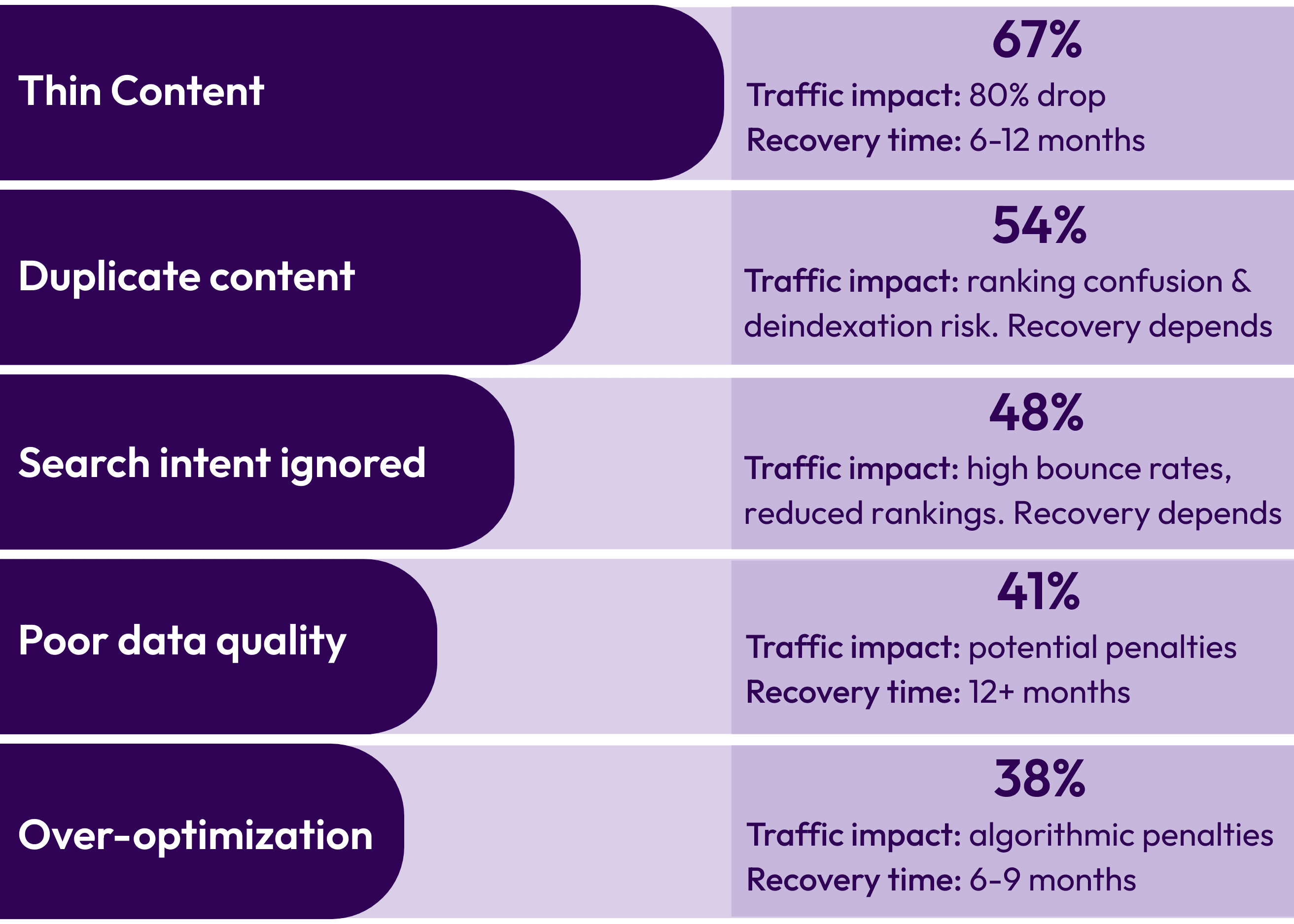
Common programmatic SEO mistakes and their frequency rates
The data reveals sobering realities about what can go wrong. Thin content pages affect 67% of programmatic implementations, often resulting in catastrophic traffic drops of up to 80% when search engines devalue or deindex pages lacking substantial value. Recovery from thin content penalties typically requires 6-12 months of consistent effort to rebuild trust with search engines.
Duplicate content issues plague 54% of programmatic systems, creating confusion for search engines about which pages to rank and risking complete deindexation. Meanwhile, 48% ignore search intent, generating pages that technically match keywords but fail to address what users actually want, leading to high bounce rates that signal quality problems to search algorithms. Poor data quality undermines 41% of implementations, potentially triggering manual penalties that can take over a year to resolve. Finally, 38% fall into over-optimization traps, stuffing keywords unnaturally and triggering algorithm penalties that require 6-9 months of recovery work.
These mistakes share a common root cause: prioritizing quantity over quality. The path to sustainable programmatic SEO success requires constant vigilance, robust quality control systems, and a commitment to genuine user value. Shortcuts inevitably lead to penalties that erase months of progress and damage long-term SEO potential.
Best Practices for Quality Content
Maintaining quality across thousands of programmatically generated pages requires a systematic approach that combines technological sophistication with human judgment. The most successful implementations embrace a philosophy of quality by design rather than quality by inspection.
Multi-Dimensional Quality Assessment
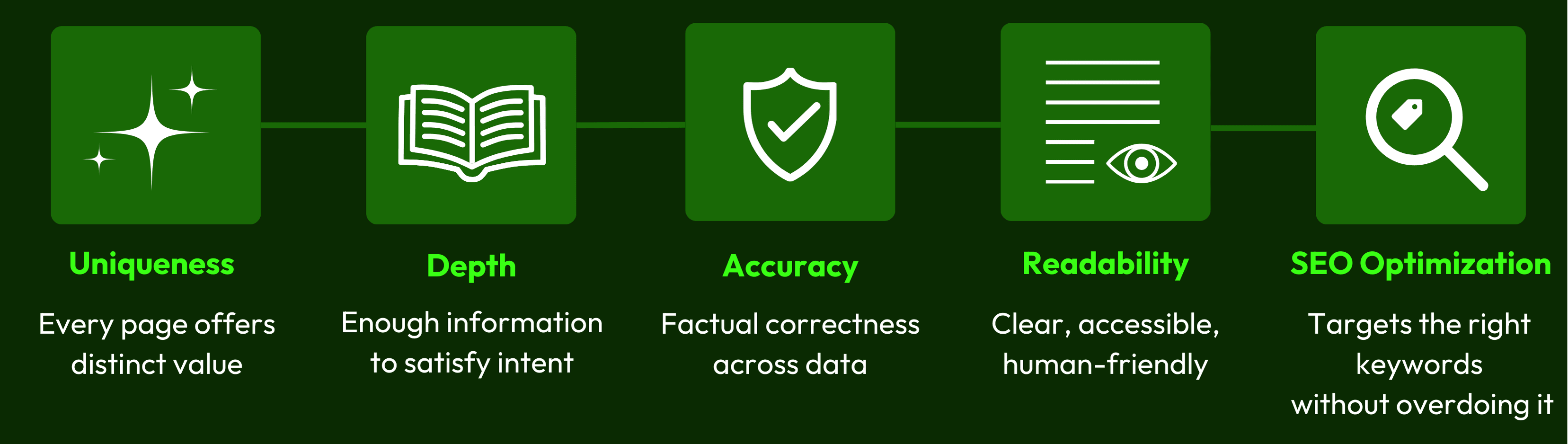
Quality cannot be measured by a single metric. Effective systems evaluate content across multiple dimensions: uniqueness (ensuring each page offers distinct value), depth (providing sufficient information to satisfy user intent), accuracy (maintaining factual correctness), readability (ensuring content is accessible and engaging), and SEO optimization (targeting appropriate keywords without over-optimization). Automated systems can flag potential issues across these dimensions, but human reviewers make final judgment calls on edge cases.
Human-AI Collaboration
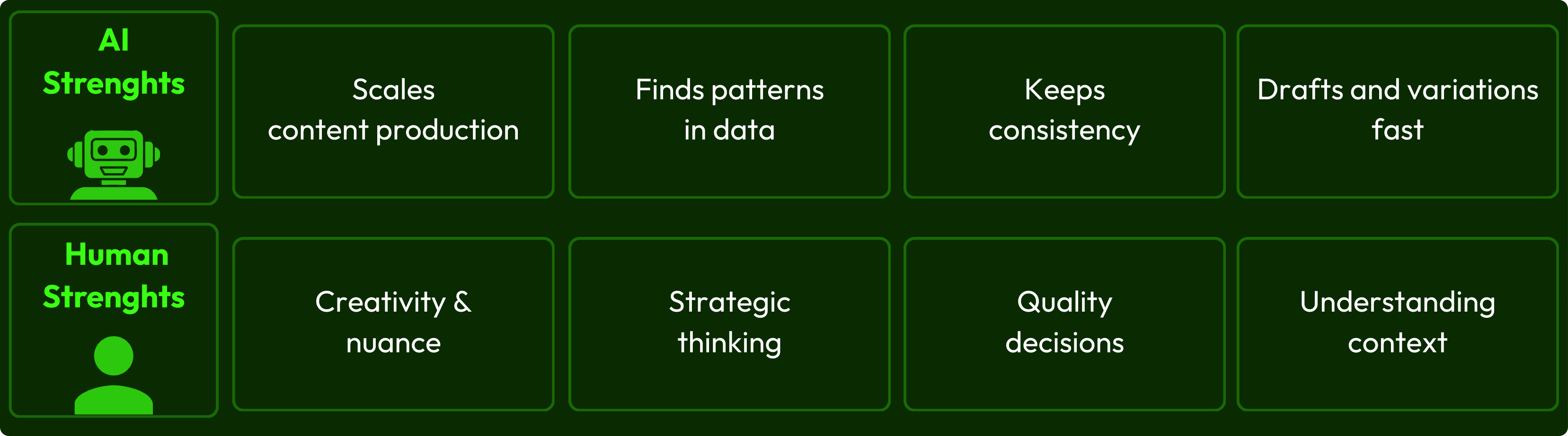
The most effective content creation workflows leverage the strengths of both AI and human creators. AI excels at processing vast amounts of data, identifying patterns, generating initial drafts, and maintaining consistency across large content sets. Humans bring creativity, strategic thinking, quality judgment, and the ability to understand nuance and context that algorithms miss. The optimal approach uses AI to handle scale and consistency while human oversight ensures strategic alignment and quality standards.
Continuous Improvement Loops
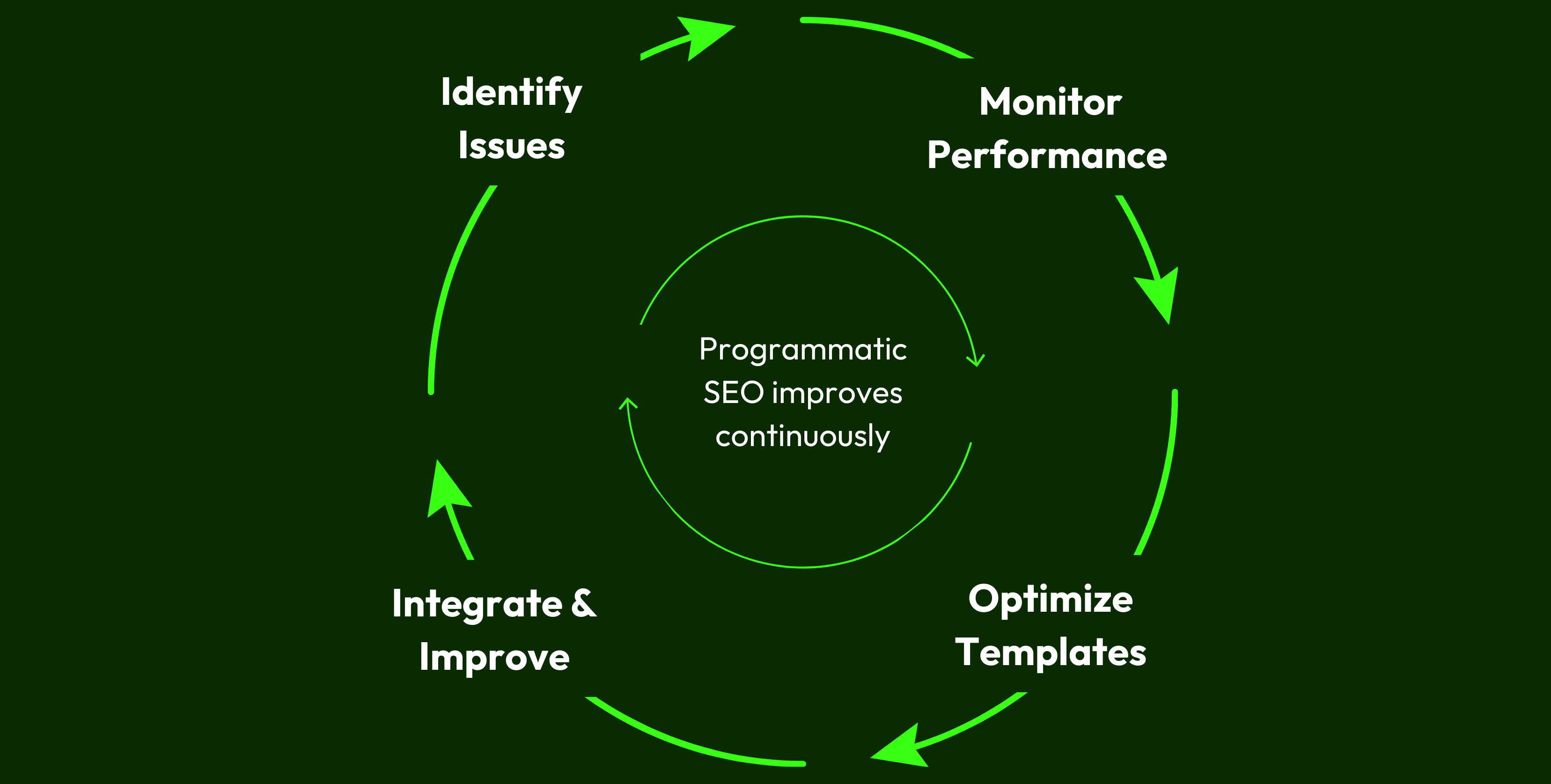
Quality isn't a one-time achievement but an ongoing commitment. Implement systems that continuously monitor performance metrics, identify underperforming pages for improvement, incorporate user feedback into template refinements, and adapt to evolving search algorithm requirements. The best programmatic SEO systems get better over time, learning from performance data to optimize both content and technical implementation continuously.
Technical Implementation Essentials
Beyond content quality, technical execution determines whether your programmatic pages will rank and perform. Search engines evaluate not just what your content says, but how it's delivered and structured. Three technical considerations are paramount for programmatic SEO success.
Site Architecture and Crawlability
When generating thousands of pages, site architecture becomes critical. Implement a logical hierarchy that makes sense to both users and search engines, ensure efficient internal linking that distributes PageRank effectively, create XML sitemaps that help search engines discover new pages quickly, and manage crawl budget by prioritizing important pages. Poor architecture can result in search engines never discovering or properly indexing your programmatic pages, rendering your content invisible regardless of its quality.
URL Structure and Canonicalization
Programmatic systems often generate similar pages that could be confused as duplicates. Establish clear URL patterns that are both user-friendly and SEO-optimized, implement proper canonical tags to signal preferred versions of similar pages, use parameters wisely to avoid creating duplicate content issues, and maintain URL consistency to preserve link equity over time. Well-structured URLs also improve user trust and click-through rates from search results.
Performance and Mobile Optimization
Page speed and mobile experience are ranking factors that become especially important at scale. Optimize image loading with lazy loading and appropriate formats, minimize JavaScript bloat that can slow page rendering, implement responsive design that works seamlessly across devices, and use caching strategies to serve content quickly. Since programmatic pages often share templates, performance optimizations can be applied systematically across your entire content set, making the investment particularly cost-effective.
Choosing the Right AI Tools
The AI content creation landscape has matured significantly, offering specialized tools for different aspects of programmatic SEO. Selecting the right combination of tools for your specific needs can dramatically impact both efficiency and output quality. Here are the leading platforms that content teams rely on in 2025:
- Jasper: Excels at maintaining brand voice consistency across large content sets. Ideal for long-form content generation where maintaining a specific tone and style is critical. Particularly effective for organizations with established brand guidelines that need to be reflected across thousands of pages.
- Copy.ai: Specializes in marketing copy, product descriptions, and advertising content. Best suited for e-commerce implementations where product detail pages need to be generated at scale while remaining persuasive and conversion-focused.
- ChatGPT: Offers remarkable versatility for research, ideation, and initial drafting across diverse content types. Its conversational interface makes it accessible for teams without technical backgrounds, while its broad knowledge base supports content creation across virtually any topic.
- Surfer SEO: Focuses on SERP analysis and content optimization, helping ensure your programmatic pages match or exceed the content depth and keyword coverage of top-ranking competitors. Particularly valuable for refining templates based on what actually ranks in search results.
- Frase: Streamlines the research and outlining process, automatically generating content briefs based on top-ranking pages for target keywords. Excellent for ensuring your programmatic content addresses the topics and questions users actually care about.
- Search Atlas: Provides comprehensive keyword research capabilities essential for identifying scalable keyword patterns that form the foundation of programmatic SEO strategies. Helps uncover long-tail opportunities that competitors might be missing.
The most sophisticated teams don't rely on a single tool but instead create integrated workflows that leverage multiple platforms. For example, using Search Atlas for keyword research, Frase for content briefs, ChatGPT or Jasper for initial content generation, Surfer SEO for optimization, and custom automation to scale the process. The right combination depends on your specific use case, team capabilities, and budget constraints.
Future of Programmatic SEO
The programmatic SEO landscape continues to evolve rapidly, driven by advances in artificial intelligence, changing search engine algorithms, and shifting user expectations. Understanding emerging trends helps organizations stay ahead of the curve and position their strategies for long-term success.
Emerging Trends and Technologies

AI-powered personalization is moving beyond basic demographics to create truly individualized content experiences. Future programmatic systems will dynamically adapt content based on user behavior, context, and preferences in real-time. Voice and visual search optimization are becoming increasingly important as users interact with search engines through new modalities, requiring programmatic content to be structured for featured snippets and visual discovery. Entity-based SEO is shifting focus from keywords to concepts and relationships, demanding more sophisticated content that demonstrates topical authority across interconnected subjects.
Measuring Success and ROI
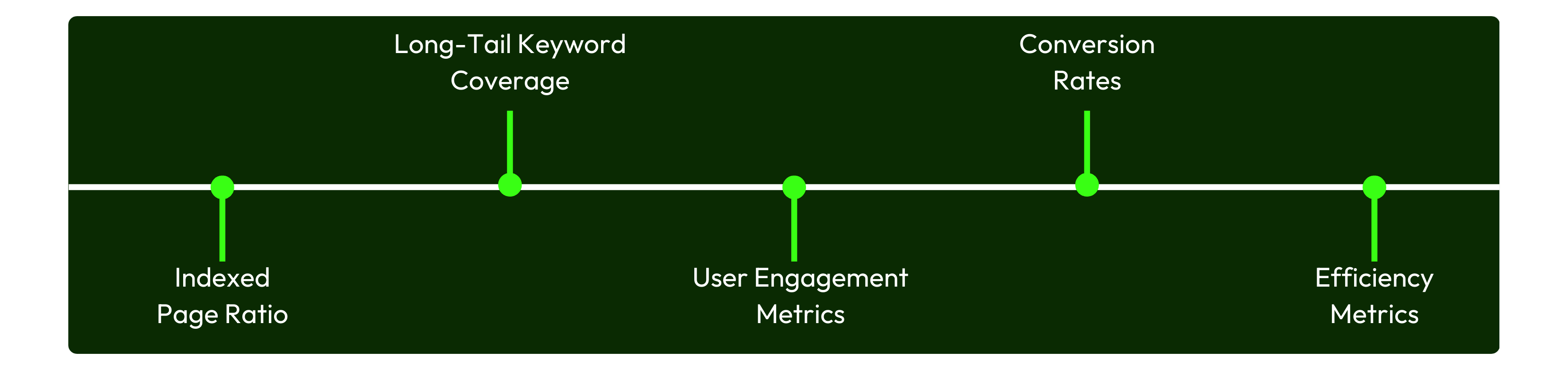
As programmatic SEO matures, measurement frameworks are becoming more sophisticated. Beyond basic traffic metrics, successful organizations track indexed page ratios (what percentage of generated pages actually get indexed), long-tail keyword coverage (how comprehensively you're capturing relevant search queries), user engagement metrics that indicate content quality, conversion rates that demonstrate business impact, and efficiency metrics that quantify the cost-effectiveness of your programmatic approach versus manual content creation.
The organizations that will thrive in the coming years are those that view programmatic SEO not as a static implementation but as an evolving system that continuously adapts to new technologies, algorithm changes, and user needs. The fundamental principle remains constant: scale must never compromise quality, and automation must always serve genuine user value.
Programmatic SEO powered by AI represents one of the most significant opportunities in modern digital marketing. The ability to create thousands of high-quality, targeted pages that serve genuine user needs while capturing massive search traffic has transformed how forward-thinking organizations approach content strategy.
Success requires balancing scale with quality, automation with oversight, and efficiency with genuine value creation. The companies dominating their markets through programmatic SEO share common characteristics: they invest in robust data infrastructure, create flexible templates that maintain quality across variations, implement rigorous quality control processes, and continuously optimize based on performance data.
As AI technology continues advancing and search engines become more sophisticated, the programmatic approach will only become more powerful and essential. Organizations that master this methodology now will establish competitive advantages that compound over time, capturing search traffic across the entire breadth of their market while competitors struggle to keep pace.