Why Reputation Management Matters in High-Stakes Industries
Your brand's reputation isn't just built in your office it's built on Google's first page. For industries like healthcare, finance, legal services, and insurance, a single negative search result can shake customer confidence and impact your bottom line. This guide explores how to use SEO not just for growth, but for defense.
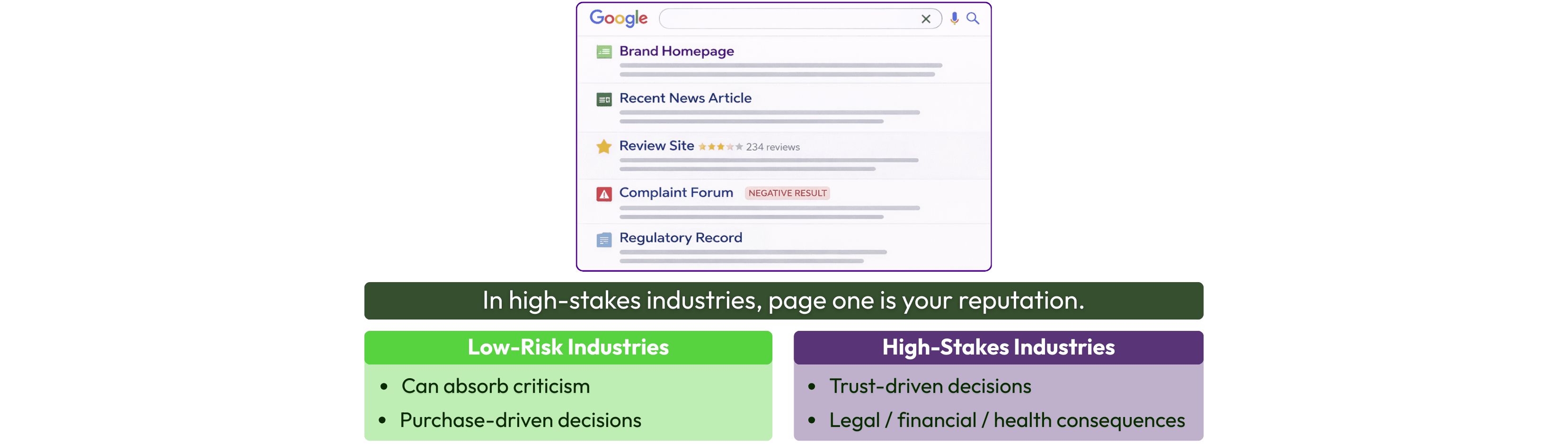
Key point: In reputation-sensitive sectors, one article or negative review on page one of Google can undermine years of hard-earned trust.
- Healthcare providers: Medical malpractice claims or regulatory violations can instantly appear in search results
- Financial institutions: Fraud allegations, regulatory investigations, or service complaints spread quickly online
- Legal practices: Case losses, disciplinary actions, or client disputes become searchable
- Insurance companies: Claims disputes, denial controversies, or underwriting allegations surface easily
Unlike retail or tech companies that can absorb minor reputation damage, reputation-sensitive sectors must be proactive, not reactive.
Understanding Your Current Brand SERP Position
Before building a defense, you need situational awareness: What does your brand's search landscape actually look like? Google your company name and the names of key executives. Assess the top 20 results and note any negative or neutral pages.
"The first step in defensive reputation SEO is mapping your digital risk. If you can't name every top-20 result for your brand queries, you're not ready to play defense."
Map out not just the top 10, but page two results. These can quickly bubble up if new negative content appears. Create a spreadsheet or chart to monitor monthly changes and spot negative content as soon as it appears.
The Five Pillars of a Defensive SEO Strategy
Defensive SEO rests on five core pillars that work together to create a protective digital wall around your reputation:
- Content Saturation: Push down negative results by flooding the SERPs with positive, optimized content.
- Link Authority: Build high-value backlinks to your positive assets, strengthening their SEO dominance.
- SERP Feature Optimization: Secure Knowledge Panels, featured snippets, and reviews to own premium real estate.
- Review & Sentiment Control: Actively manage and improve ratings on Google, Yelp, and industry platforms.
- Crisis Response: Have a playbook in place for when negative news or reviews break through.
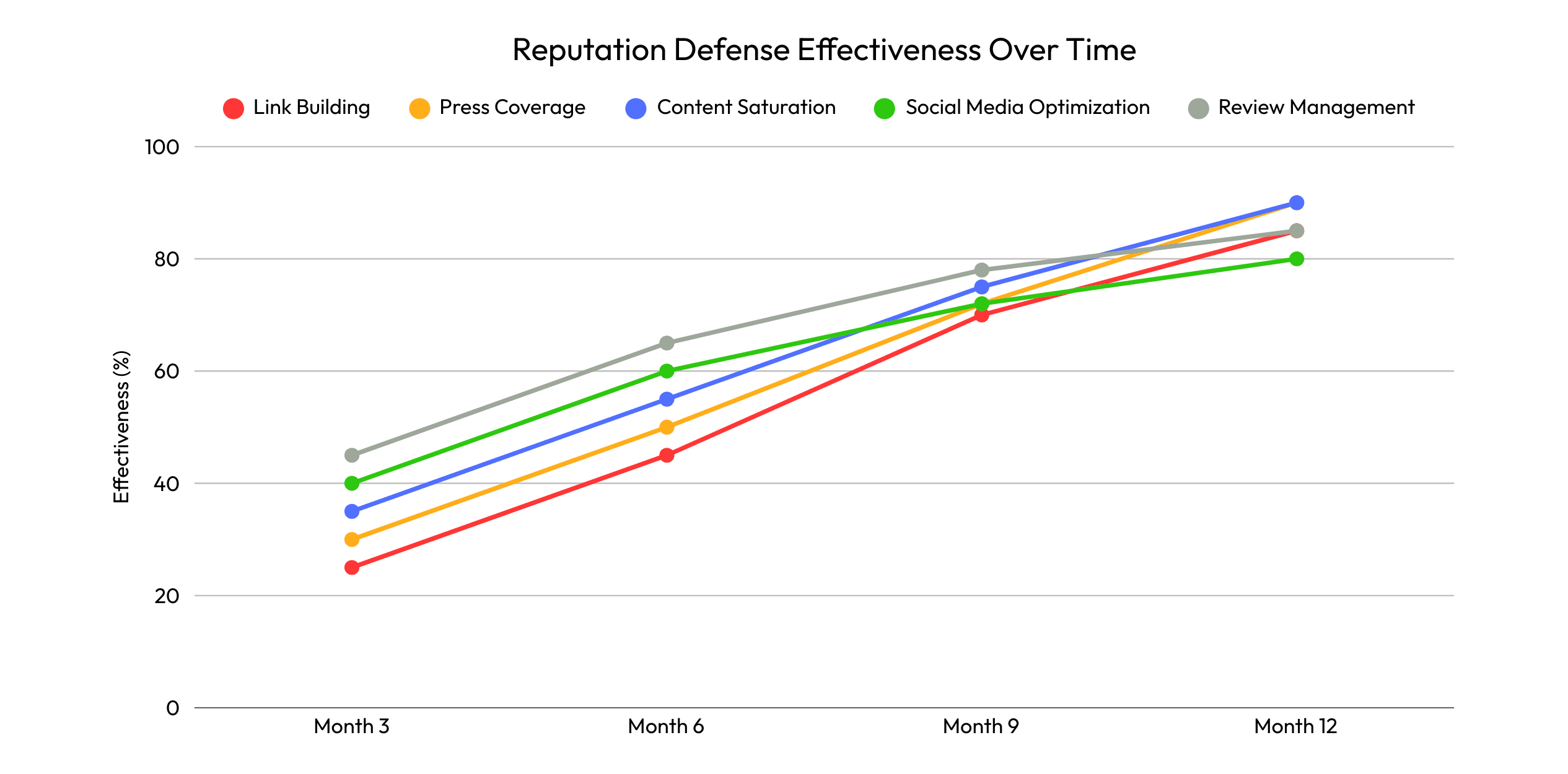
This chart illustrates how core reputation management strategies content saturation, link building, social media optimization, review management, and press coverage build effectiveness over a 12-month period. Notice how strategies like content creation and social optimization provide steady, compounding benefits while earned media creates powerful, long-term SERP impact.
Content Saturation: Flooding SERPs with Positive Assets
The most straightforward defensive strategy is creating so much positive, optimized content that negative results get pushed to page two or beyond. This requires consistent, strategic content creation across owned, earned, and social channels.
![Mock Google results page for ‘[Your Brand Name]’ showing page-one dominance by controlled assets (homepage, resource hub, blog, case study, LinkedIn, YouTube, press feature, sensitive landing page), with a ‘Negative Article’ pushed down and labeled ‘Now on Page 2.’ Footer note: ‘Owned + Social + Earned = Page One Control.’](https://res.cloudinary.com/kenshomedia/image/upload/v1771439132/prod/3_1ef38811cf.png)
Tip: Layer content across your website, social, blogs, and third parties for maximum SERP reach.
- Build a resource hub: Create comprehensive pillar pages on core topics with 50+ supporting cluster articles
- Publish regular blog content: Maintain a content calendar with 2-4 high-quality articles monthly
- Leverage your company site: Optimize every page (About, Services, Team bios, Case studies)
- Create landing pages: Develop targeted pages for sensitive keywords that might surface negative content
- Claim social profiles: Establish presence on LinkedIn, YouTube, Twitter, Facebook, and industry-specific platforms
Building Strategic Link Authority
High-authority backlinks are trust signals that Google weighs heavily. When reputable sources link to your positive content, it sends a clear message about your credibility. Acquiring these links should happen naturally from earned media, not just through self-publishing.

Earned media unpaid coverage from authoritative publishers carries more weight than owned content. When TechCrunch, CNBC, or your industry's leading publication mentions your brand with a link, Google and searchers view you as more credible.
Press releases distributed via PR Newswire, PRWeb, or Newswire can appear on hundreds of high-authority domains, boosting your search profile almost overnight. Make these releases newsworthy, not just adverts.
Optimizing for Google Knowledge Panels & SERP Features
Google's SERP features Knowledge Panels, featured snippets, reviews, and new AI Overviews— occupy premium real estate at the top of search results. Claiming and optimizing these can push negative results further down, while controlling the narrative key searchers see.
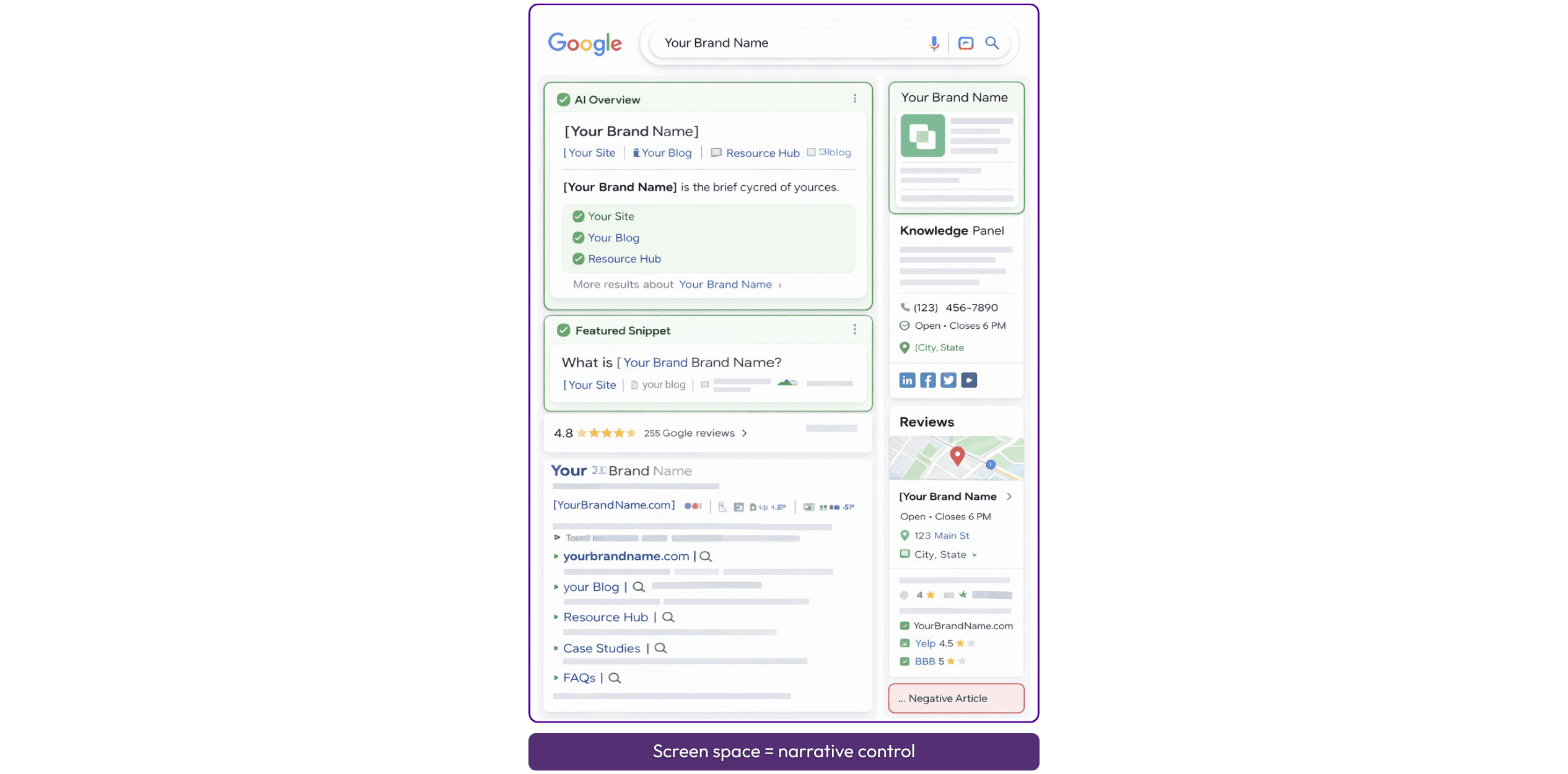
- Keep your Google Business Profile verified and regularly updated
- Add structured data markup to your site (Organization, Person schema)
- Encourage consistent reviews on Google, Yelp, and key sites
- Respond to reviews (positive and negative) to show active engagement
- Monitor and update Wikipedia and authoritative industry profiles
"Optimizing for SERP features is about credibility and visibility—not just ranking, but occupying more screen space with positive assets."
Review Management & Sentiment Control
Review sentiment directly influences how searchers perceive your brand. When search results show a 4.8-star Google rating alongside your Knowledge Panel, trust increases dramatically. Actively manage your review profiles on Google, Yelp, Trustpilot, and industry directories. Encourage satisfied customers to post and address all concerns transparently.
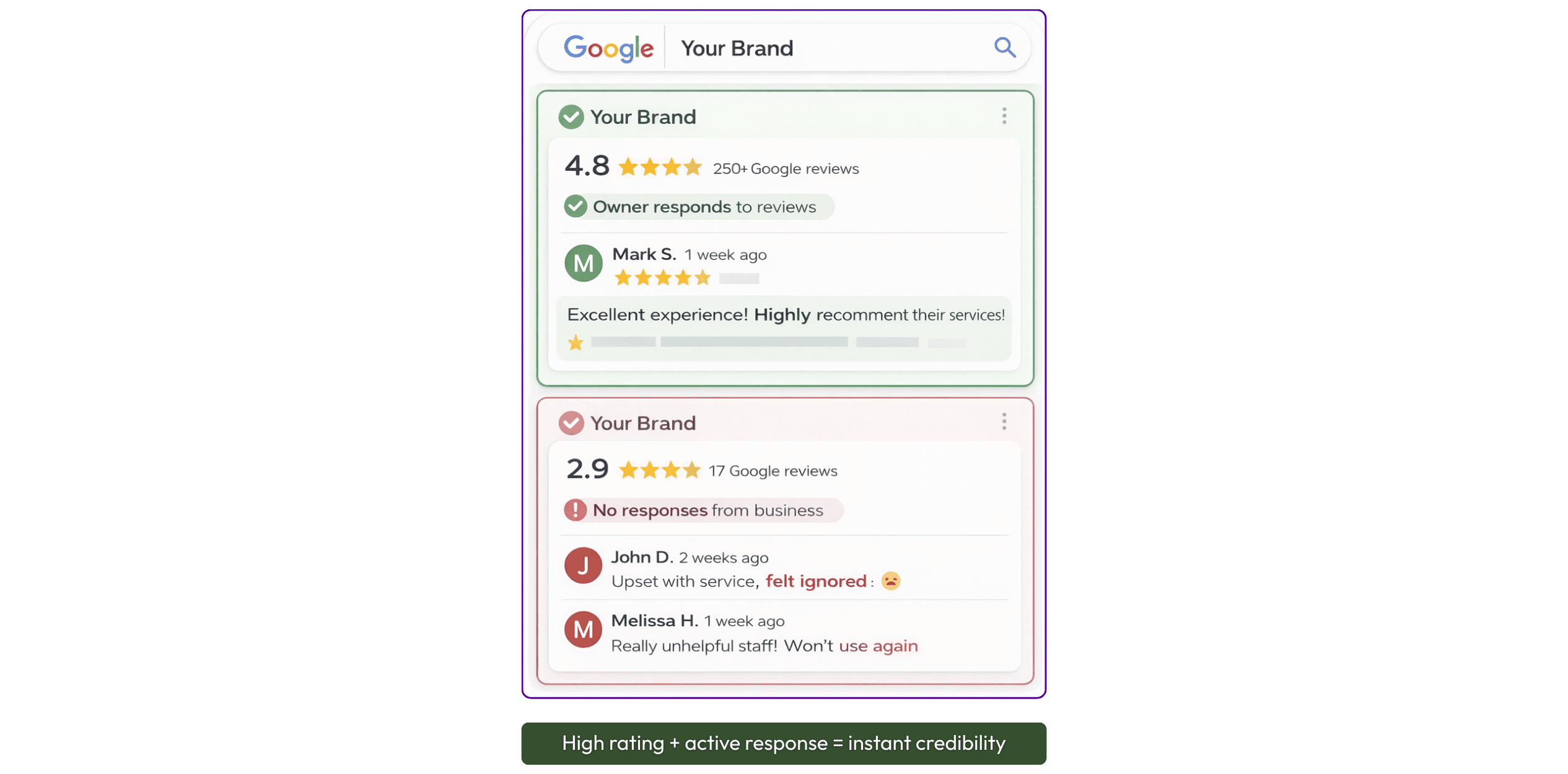
Pro Tip: Automate review requests and monitor social signals weekly for early warning signs of shifts in customer sentiment.
Crisis Prevention & Response Playbook
Even with preventive measures, crises happen a negative news story, legal action, or viral social post. Having a documented crisis response playbook ensures your team acts quickly and strategically when reputation threats emerge.

- Assign a cross-functional crisis team including legal, communications, and digital leads
- Monitor SERPs and socials in real time with alerting tools
- Prepare pre-drafted holding statements and FAQs
- Launch rapid content initiatives to control emerging queries
- Engage with media and stakeholders proactively, not defensively
- Track escalations and measure reputation impact monthly
Measuring Your Reputation SEO Success
You can't improve what you don't measure. Track these key metrics to evaluate your reputation SEO success over time:
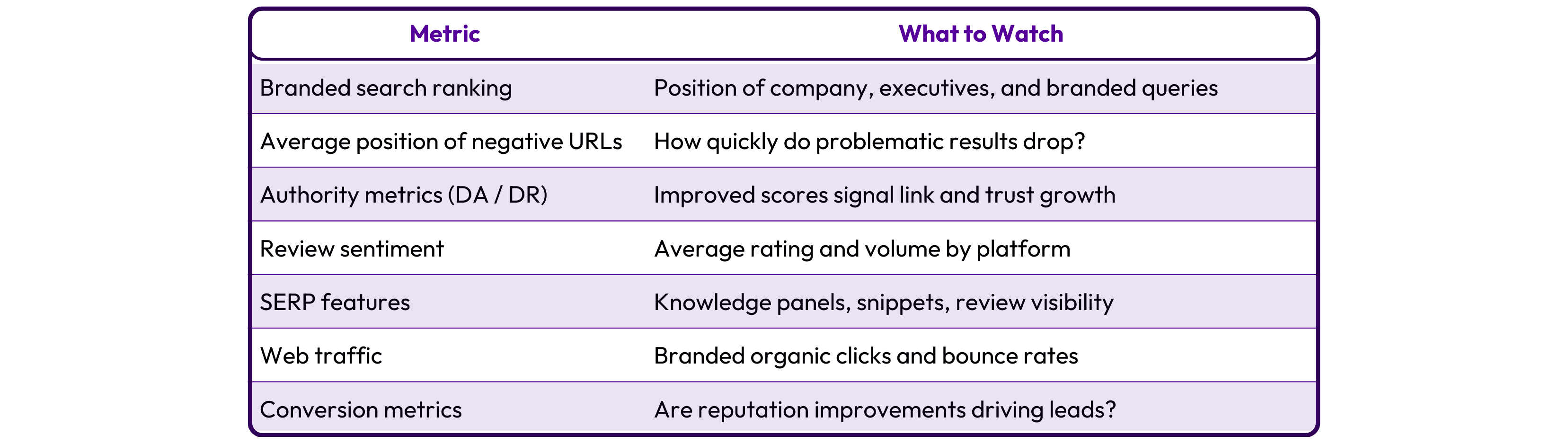 Summary: Make measurement and reporting a core part of your reputation SEO process to stay ahead of emerging threats.
Implementation Timeline: Building Reputation SEO Over 12 Months
Reputation SEO isn't a sprint, it's a marathon. Most organizations see meaningful progress in 6-9 months, with compounding benefits beyond a year. Here’s a typical timeline for high-stakes reputation management:

"Long-term success in reputation SEO means treating it as a continuous process, not a one-time project."
Key Takeaways
- Reputation SEO is a proactive, long-term strategy that builds authority before crises hit
- Content saturation, link building, and SERP optimization are your primary defensive tools
- High-stakes industries must treat reputation management as a core business function
- Measurement and continuous monitoring ensure your strategy stays effective
- Crisis playbooks provide structure when negative situations emerge quickly