Artificial intelligence isn't just reshaping the future, it’s already here, transforming industries, including the highly competitive field of search engine optimization (SEO). For those stepping into the SEO landscape, the sheer amount of terminology, tools, and tactics can feel overwhelming. Enter ChatGPT, OpenAI's natural language processing marvel, designed to act as your personal assistant.
This isn’t an exaggeration; ChatGPT is your Swiss Army knife for simplifying tasks, brainstorming strategies, and energizing your creativity. It allows professionals - new and seasoned alike- to optimize time, focus strategically, and even experiment fearlessly.
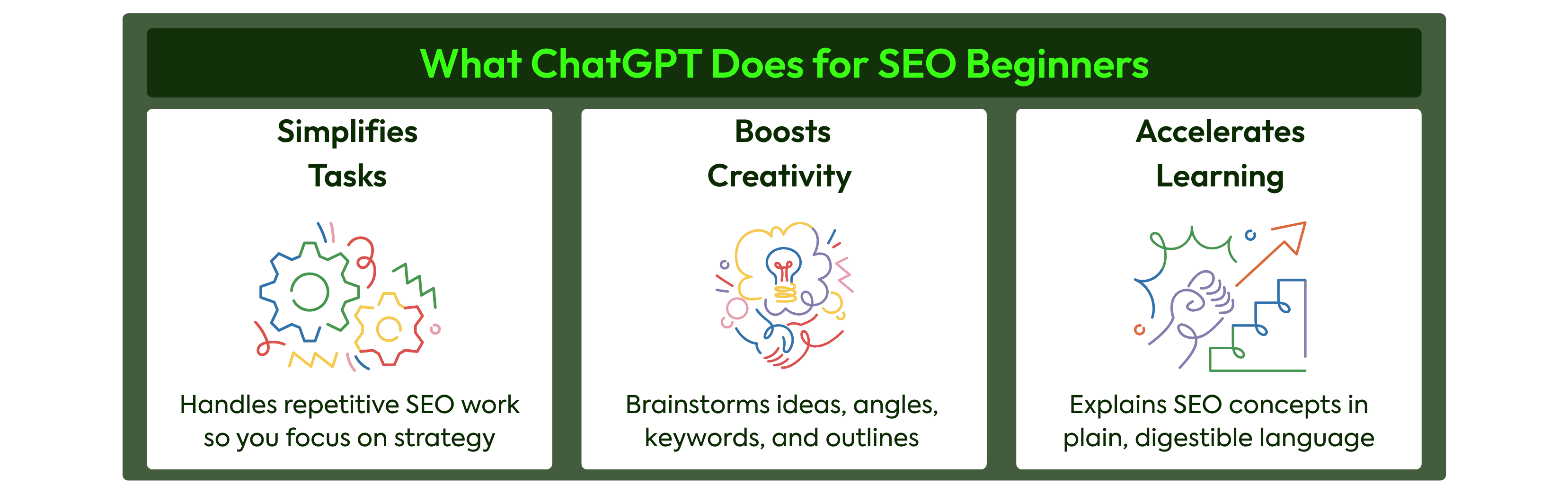
But it’s worth asking: will an AI tool like ChatGPT help you craft strategies that search engines reward, or could relying on it completely come with caveats? It turns out, navigating this space ethically and intelligently requires a balance of human intuition and AI-driven efficiency.
In the sections that follow, we’ll uncover how ChatGPT can assist beginners in SEO, guide you through practical methods of implementation, and help demystify advanced tasks like audits and schema markup. Ready to dive in? Let’s orchestrate a combination of insights and innovation made possible with ChatGPT.
How ChatGPT Assists with SEO

It’s tempting to think SEO begins and ends with writing a blog post filled with keywords. The truth, however, is significantly more nuanced. SEO involves thorough keyword research, technical audits, strategic content planning, and optimization, all tasks ChatGPT supports, particularly for beginners who may feel they’ve been dropped into a labyrinth of Google algorithms. Below are key areas where ChatGPT can provide tremendous value:
Keyword Research: Simplified Creativity
Why It Matters:
Keywords are not mere words, they're convoluted narratives, reflecting intent, demographic behavior, and unmet needs.
How ChatGPT Delivers:
By providing tailored, long-tail, and highly contextual keywords, ChatGPT simplifies the brainstorming process. Launch a conversation with prompts that specifically outline your needs.
Example Prompt:
"Generate 15 long-tail keywords focusing on eco-friendly travel products for millennials."
Output: “Sustainable luggage for weekend getaways,” “Vegan travel kits under $50,” or “Lightweight solar-powered chargers for green travel.” Notice how this isn’t cookie-cutter; the suggestions feel tailor-made, attending to demographic specificity (millennials) and context (eco-friendly travel).
Content Ideation and Writing Assistance:
Writing is an art, yet it’s also a science when placed within the realm of SEO. How does ChatGPT navigate both these polarities? By acting as both your editor and your co-writer. It drafts introductions, rephrases outdated content, and creates compelling meta descriptions destined to pique curiosity.
Pro Tip: Prompt clarity matters enormously. The more specific and vivid your request, the better the results ChatGPT delivers.
Example Prompt for Meta Optimization:
"Write a compelling 155-character meta description for an article about transitioning to electric vehicles."
ChatGPT’s response: "Switching to an electric car? Learn how EVs save money, reduce emissions, and grant access to eco-friendly incentives." (Notice the mix of benefits presented in a reader-friendly yet semantically dense manner.)
Competitor Analysis in a Flash:
Every great stratagem relies, in part, upon surveying the competitive landscape. With ChatGPT, you can feed it summarized competitor outlines and let it discern patterns. Who are their targeted audiences? Are their valuable backlinks stating something subtle yet profound? The AI can even generate alternate angles to outrank top-performing content.

Advanced SEO Tasks Simplified by AI
SEO advanced practitioners often juggle audits, technical improvements, and micro-data implementations like schema markups. Believe it or not, ChatGPT can do more than suggest blogger-friendly keywords, it handles laborious backend tasks effortlessly.
SEO Audit Templates:
A technical SEO audit might feel overwhelming as it spans from link structures to mobile usability. Yet, you can direct ChatGPT to offer actionable templates:

Internal Linking Optimization:
Smart internal linking uses context and relevance to guide search engines (and readers!) toward your most valuable pages. ChatGPT can pinpoint potentially valuable linking opportunities across a content tree generated from existing pieces, improving crawlability while distributing link equity more effectively.
Schema Markup Creation:
For deeply technical work involving JSON-LD, ChatGPT transforms tedious minutes into seconds. Consider FAQs or reviews, two often-misused markup types. You’ll be surprised at how ChatGPT converts content into validated schemas.
Prompt Example:
"Create a JSON-LD schema markup for a coffee shop offering weekly specials."
Ethical Considerations, Practical Tips, and AI-Limitations
1) Enhancing Your Workflow Without Cutting Corners:
While ChatGPT is a stellar brainstorming partner, it wasn’t designed to eliminate the human element entirely. Over-reliance risks diluting content authenticity, especially since search engines reward originality. Skills like understanding user intent or strategizing deeper industry-specific insights remain uniquely human—a bridge AI hasn’t yet precisely crossed.
2) Recognizing Ethical Boundaries:
Search engines like Google currently reward human-generated, user-centric content. When creating content through ChatGPT, ensure you enrich outputs with facts, case studies, and external validations. Otherwise, misuse could risk penalties, including loss of ranking credibility.
3) Prompt Programming Proficiency:
Writing a good prompt is one of the most valuable skills when working with ChatGPT. The clearer and more specific your request is, the better the results you’ll get. This doesn’t mean your prompt has to be long — it just needs to communicate the right details: what you want, why you want it, and how you want it delivered.
Think of a prompt as giving directions. If the directions are vague, the output will be vague. If the directions are clear, focused, and include the necessary context, the AI can deliver exactly what you need.
In short: clear prompts lead to great outcomes.
Example: Bad Prompt vs. Good Prompt
- Less effective prompt:
“Explain this in a better way.”
- More effective prompt:
“Rewrite the following paragraph in a friendly, conversational tone, making the ideas easier to understand for someone new to the topic.”
The second prompt gives direction, tone, purpose, and audience — which helps ChatGPT respond with much higher accuracy and quality.
Prompt writing isn't just a helpful trick; it’s becoming an essential skill for anyone using AI tools effectively.
Ethical Considerations, Practical Tips, and AI Limitations (Continued)
Prompt Programming as an Art Form
Much like wielding a painter's brush, crafting the perfect ChatGPT prompt requires thought and intent. Weak or ambiguous prompts often lead to bland, oversimplified outputs. SEO professionals who master prompt engineering will find themselves at a strategic advantage. Here's a comparison to illustrate this:
- Weak Prompt Example: "Suggest keywords for my blog."
- Result: Generic, diluted keyword suggestions not tied to any audience, context, or competitive insight.
- Refined Prompt Example: "Generate 15 long-tail keywords for a parenting blog targeting millennial moms who are interested in eco-friendly baby products, with a focus on low-competition terms."
- Result: An audience-tailored, actionable keyword set, e.g., "biodegradable baby bottles," "organic crib sheets," or "chemical-free teething toys."
Balancing AI and Creativity
While ChatGPT dazzles with efficiency, it's crucial to balance AI’s analytical insights with your creative flair. An SEO strategy built entirely on AI-generated ideas runs the risk of sounding robotic or derivative. By weaving personal expertise, real-world examples, or unique analogies into your content, you ensure that it resonates genuinely with both readers and algorithms.

Ethical AI Use in the SEO Ecosystem
Let’s not gloss over the elephant in the room: misuse. ChatGPT is often adopted as a shortcut for generating mountains of content in minimal time. While tempting, this can backfire; Google’s guidelines emphasize expertise, authority, and trustworthiness (E-A-T) - attributes hard to mimic through completely automated text.
Ethical SEO Practices Include:
- Using AI tools for ideation, inspiration, or labor-intensive tasks (e.g., schema markup) while maintaining human involvement in final drafts.
- Always fact-checking generated data and references - errors or inaccuracies can undermine your authority.
- Avoiding content flooding; prioritize quality over quantity.
Recognizing ChatGPT’s Boundaries
While ChatGPT is remarkably versatile, it does have limitations:
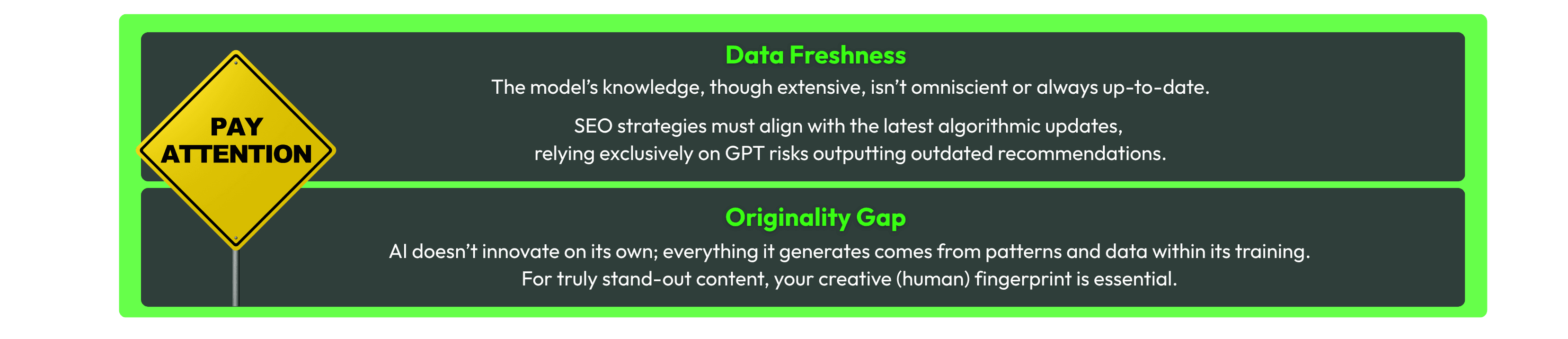
By understanding where ChatGPT excels and where it needs a helping hand, you can wield it more effectively, minimizing risk while maximizing results.
Maximizing ChatGPT’s Impact: Tips and Tricks for Professionals
Want to extract the most value from ChatGPT while ensuring a competitive edge? Follow these actionable strategies when integrating AI into your SEO routines:
- Structure Your Prompts for Precision:
Instead of asking ChatGPT to “help improve my SEO,” define what you need with razor-sharp accuracy. Be specific about objectives, demographics, tone, and constraints.
- Experiment With Draft Variations:
One overlooked gem of ChatGPT is its ability to provide multiple perspectives. For example, generate three different drafts of a blog intro with varying tones: informational, playful, or urgent. Blend the most engaging elements into the final draft.
- Batch Process Routine Tasks:
Whether you manage a multi-client agency or a personal blog, repetitive tasks like writing product descriptions, creating templates, or crafting “About Us” pages can be automated with AI.
- Blend AI With SEO Tools:
Don’t treat ChatGPT as an all-in-one substitution for tools like Google Analytics, Ahrefs, or SurferSEO. Instead, use it in tandem: generate content using ChatGPT, optimize it using analytics-based insights, and refine performance reports across platforms.
Experimentation as the Key to Mastering AI for SEO
AI tools like ChatGPT represent not just a technical evolution but a professional revolution for how marketers, content creators, and SEO newcomers operate. For beginner SEO professionals, this combination of precision and accessibility isn’t simply a tool; it’s a teacher, guide, and co-creator wrapped into one.
By carefully balancing the efficiency of ChatGPT with personal expertise and ethical boundaries, you’ll ensure that your SEO efforts remain human-centric, high-quality, and algorithm-friendly.
And remember: success with AI is iterative. The more you experiment with prompts, templates, and creative use cases, the sharper your integration will become. SEO mastery doesn’t happen overnight, but with ChatGPT, navigating the learning curve becomes far less daunting, enabling you to focus on what really matters: delivering value to your audience.