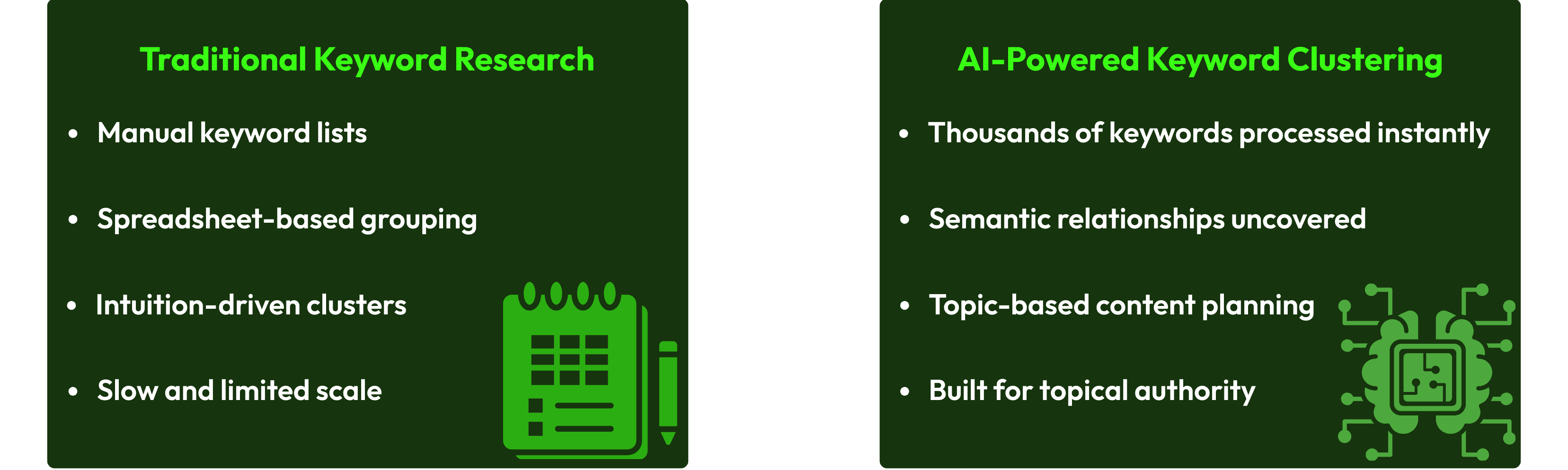
The landscape of search engine optimization has undergone a profound transformation with the integration of artificial intelligence and machine learning technologies. Where traditional keyword research once relied on manual spreadsheet analysis and intuition-based grouping, today's SEO professionals have access to sophisticated AI-powered tools that can process thousands of keywords in seconds, identify semantic relationships that humans might miss, and construct comprehensive content strategies based on topical relevance. This shift represents more than just technological advancement; it fundamentally changes how we approach content planning, site architecture, and the pursuit of topical authority in an increasingly competitive digital environment.
Understanding AI-Powered Keyword Clustering
Keyword clustering represents a methodological approach to organizing keywords into thematically related groups based on semantic similarity, search intent, and contextual relevance. Unlike traditional keyword grouping, which often relies on surface-level similarities or manual categorization, AI-powered clustering leverages natural language processing algorithms to understand the deeper relationships between search queries. This technology analyzes patterns in how search engines group and rank content, examining factors like SERP overlap (the degree to which different keywords return similar search results), co-occurrence patterns, and semantic distance between terms.
The business value of implementing keyword clustering extends far beyond organizational convenience. When you group related keywords together, you create opportunities to target multiple search queries with single pieces of comprehensive content rather than producing dozens of thin, competing pages. This consolidation approach aligns perfectly with Google's preference for authoritative, in-depth content that thoroughly addresses user needs. Companies implementing clustering strategies typically see improvements in organic visibility because they're creating content that matches how search engines actually understand and categorize information.
Consider a practical example from the fitness industry. Traditional keyword research might identify "home workout equipment," "best exercise gear for home," and "home gym essentials" as separate targets requiring individual pages. AI-powered clustering recognizes these as semantically related queries with similar search intent, suggesting a single comprehensive guide that addresses all three variations while incorporating related long-tail keywords like "affordable home workout tools" and "space-saving exercise equipment." This approach not only reduces content redundancy but also creates stronger topical signals that search engines reward with better rankings.
How Machine Learning Transforms Keyword Research
The underlying technology powering modern keyword clustering relies on sophisticated machine learning models, particularly those based on natural language processing and semantic analysis. At the core of these systems are algorithms like Word2Vec, BERT (Bidirectional Encoder Representations from Transformers), and similar neural network architectures that have been trained on massive datasets of text to understand language in context. These models don't just match keywords based on exact phrases; they understand synonyms, related concepts, and the subtle nuances that distinguish informational queries from transactional ones.
When you input a seed keyword into an AI-powered clustering tool, the system performs several analytical steps simultaneously. First, it generates an expanded list of related keywords by querying multiple data sources, including search engine APIs, keyword databases, and proprietary datasets. Then it analyzes the search engine results pages for each keyword, identifying which URLs rank for multiple terms. This SERP similarity analysis becomes a crucial signal: when the same pages rank for different keywords, it indicates that search engines view those terms as closely related. The algorithm calculates a similarity score between every pair of keywords based on their SERP overlap, typically using metrics like Jaccard similarity or cosine similarity.
Beyond SERP analysis, advanced clustering tools employ semantic analysis to understand the contextual relationships between keywords. This involves converting each keyword into a high-dimensional vector representation (an embedding) where semantically similar terms are positioned closer together in mathematical space. The system then applies clustering algorithms like K-means, hierarchical clustering, or DBSCAN to group these vectors into distinct clusters. What makes this approach powerful is its ability to identify non-obvious relationships. For instance, it might cluster "digital nomad insurance" with "remote work health coverage" even though they share no common words, because the semantic meaning and search intent align closely.
Modern tools from providers like SEMrush, Ahrefs, and MarketMuse have integrated these machine learning capabilities directly into their platforms, making sophisticated analysis accessible without requiring deep technical expertise. SEMrush's Keyword Strategy Builder, for example, uses AI to automatically create keyword clusters and suggest content structures, while Ahrefs' keyword clustering feature groups keywords based on the top 10 ranking pages. These tools have democratized advanced SEO techniques that were previously available only to large enterprises with dedicated data science teams.

The Role of Topic Modeling in Content Strategy
Topic modeling takes keyword clustering a step further by identifying the overarching themes and subtopics within your content domain. While clustering groups similar keywords together, topic modeling reveals the hierarchical structure of how these clusters relate to broader subject areas. This distinction matters enormously for content strategy because it helps you visualize your content ecosystem and identify gaps in your topical coverage. Using algorithms like Latent Dirichlet Allocation (LDA) or Non-negative Matrix Factorization (NMF), topic modeling analyzes large collections of text to discover hidden thematic structures.
The practical application of topic modeling manifests most clearly in the pillar-cluster content model that has become standard practice for modern SEO. In this framework, you create comprehensive pillar pages that broadly cover main topics, supported by cluster content that dives deep into specific subtopics. Each cluster page links back to the pillar, creating a clear topical hierarchy that both users and search engines can navigate easily. For example, a pillar page on "Content Marketing Strategy" might be supported by cluster content covering "Content Calendar Planning," "Content Distribution Channels," "Content Performance Metrics," and "Content Creation Workflows."

This visualization illustrates how AI-powered clustering algorithms organize keywords into semantic groups based on contextual relationships rather than simple word matching. The central node represents your seed keyword or primary topic, with branches extending to related keyword clusters identified through machine learning analysis. Each cluster represents a group of keywords that share similar search intent and semantic meaning, as determined by SERP overlap analysis and natural language processing.
Notice how the connections between clusters reveal opportunities for internal linking and content organization. Keywords positioned closer together in the diagram have stronger semantic relationships, suggesting they should be addressed within the same content piece or closely linked pages. This networked approach to keyword research moves beyond linear lists, providing a multidimensional view of how your target audience searches for information and how search engines understand topical relationships.
Topic modeling also reveals content gaps that represent untapped opportunities. By analyzing which subtopics your competitors cover comprehensively and comparing that against your own content inventory, you can identify areas where additional content would strengthen your topical authority. Tools like MarketMuse excel at this type of competitive content gap analysis, using AI to evaluate the breadth and depth of topical coverage across entire websites. The platform generates content briefs that specify exactly which subtopics and related concepts you should include to compete effectively for your target keywords.
The strategic advantage of topic modeling becomes particularly evident when planning content for different stages of the customer journey. By analyzing the search intent signals within your keyword clusters, you can map topics to awareness, consideration, and decision stages. Informational clusters containing "how to," "what is," and "guide" modifiers clearly serve awareness-stage users, while clusters with "best," "vs," and "review" keywords target consideration-stage searchers. Transactional clusters featuring "buy," "price," and "discount" terms address decision-stage intent. This mapping ensures your content strategy addresses user needs across the entire funnel.
Building Your Keyword Clusters: A Step-by-Step Implementation Guide
Implementing an effective keyword clustering strategy requires systematic execution across multiple stages. The following process outlines the practical steps for building robust keyword clusters that drive measurable SEO results:
 Start by identifying 10 to 20 core seed keywords that represent your main business offerings or content themes. These should align with your business goals and target audience needs. For an e-commerce site selling outdoor gear, seed keywords might include "camping equipment," "hiking boots," "backpacking gear," and "outdoor clothing." Document the business value and target audience for each seed keyword to ensure alignment with broader marketing objectives.
 Use keyword research tools to expand each seed keyword into a comprehensive list of related terms, variations, and long-tail keywords. Aim for at least 200 to 500 keywords per seed topic to ensure sufficient data for meaningful clustering. Leverage multiple data sources including Google Keyword Planner, SEMrush, Ahrefs, and competitor analysis. Export these keyword lists with accompanying metrics like search volume, keyword difficulty, and current rankings (if applicable).
 Import your keyword lists into a clustering tool like SEMrush's Keyword Strategy Builder, Ahrefs' Keyword Clustering feature, or dedicated platforms like Keyword Insights or Hypertxt. Configure the clustering parameters, particularly the SERP similarity threshold, which determines how closely related keywords must be to cluster together. A threshold of 3 to 4 (meaning at least 3 to 4 URLs appear in the top 10 for both keywords) provides good balance between specificity and breadth. Let the algorithm process your keywords and generate initial clusters.
 Review the AI-generated clusters for logical coherence and strategic value. Some clusters may need manual adjustment to better align with your content strategy or to separate mixed search intents. Look for clusters that combine informational and transactional keywords, as these typically perform better when split. Evaluate each cluster's search volume potential, ranking difficulty, and alignment with business priorities to determine which deserve dedicated content.
 Assign appropriate content formats to each cluster based on search intent and existing content assets. Informational clusters might map to blog posts or comprehensive guides, while transactional clusters align with product pages or category pages. Determine whether each cluster requires new content creation or can be addressed by optimizing existing pages. Create a content architecture diagram showing how pillar pages and cluster content will link together.
 For each priority cluster, create detailed content briefs that specify target keywords, required subtopics, recommended word count, and internal linking opportunities. Use tools like SurferSEO or Clearscope to analyze top-ranking content and identify which topics, entities, and related concepts should be included. Ensure briefs address the full spectrum of user questions within each cluster rather than focusing narrowly on individual keywords.
 Execute your content plan, creating or optimizing pages according to your cluster strategy. Implement proper internal linking between pillar and cluster content to reinforce topical relationships. After publication, monitor performance metrics including organic traffic growth, keyword ranking improvements, and engagement signals. Use this data to refine your clustering approach and identify which cluster types deliver the strongest ROI for your specific situation.
Implementing Topical Authority Through Cluster Architecture
Topical authority represents the degree to which search engines perceive your website as a comprehensive, trustworthy resource on specific subjects. Building this authority requires more than just publishing high-quality content; it demands strategic content architecture that demonstrates depth and breadth of coverage across related topics. The cluster model provides the framework for constructing this authority systematically, creating clear topical boundaries that search engines can recognize and reward.
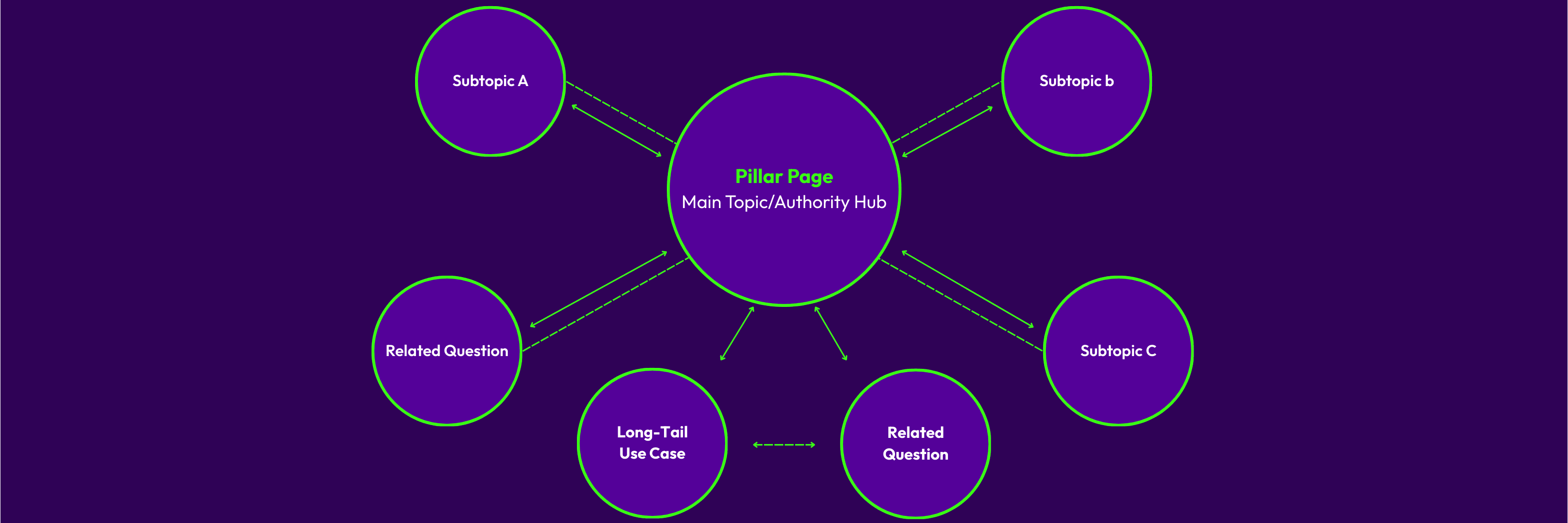
When implementing cluster architecture, the relationship between pillar content and supporting cluster pages becomes critical. Your pillar page should serve as a comprehensive overview that addresses the main topic broadly while linking out to more detailed cluster content. Each cluster page should dive deep into a specific subtopic while linking back to the pillar, creating a bidirectional linking structure that reinforces the topical relationship. This internal linking pattern sends strong signals to search engines about content hierarchy and topical focus.
Advanced pillar page and cluster content architecture with internal linking strategy
This advanced architecture diagram illustrates the sophisticated relationship between pillar content and supporting cluster pages in a comprehensive topical authority strategy. The central hub represents your primary pillar page, which serves as the authoritative foundation covering the broad topic in depth. From this central pillar, multiple cluster pages branch out, each focusing on specific subtopics or keyword groups identified through AI-powered clustering analysis.
The internal linking strategy shown through the connecting arrows demonstrates how link equity flows bidirectionally between pillar and cluster content, reinforcing topical relationships for search engines. Each cluster page not only links back to the pillar but also connects to related cluster pages, creating a semantic web that search algorithms can easily crawl and understand. This interconnected structure signals to search engines that your site offers comprehensive coverage of the topic, establishing your domain as an authoritative resource. The visual hierarchy makes it clear how information is organized, helping both users navigate your content effectively and search engines recognize the depth and breadth of your topical expertise.
The depth of your cluster coverage directly impacts your topical authority. Search engines don't just count the number of pages you have on a topic; they evaluate the comprehensiveness and uniqueness of your coverage compared to competitors. This means your cluster content should address questions and subtopics that competing sites overlook. Use tools like AnswerThePublic, AlsoAsked, and People Also Ask data to identify the full spectrum of user questions within your topic area. Incorporating these questions into your cluster content creates differentiation and demonstrates thorough topical understanding.
Content freshness plays an often-underestimated role in maintaining topical authority. Search algorithms favor sites that regularly update and expand their topical coverage, interpreting this activity as a signal of expertise and currency. Establish a maintenance schedule for your cluster content, revisiting pillar pages quarterly to add new information, update statistics, and incorporate emerging subtopics. When new cluster opportunities emerge (such as trending questions or industry developments), create additional cluster content and link it into your existing structure. This ongoing expansion demonstrates that your authority continues to grow rather than stagnate.

The technical implementation of cluster architecture requires attention to URL structure, internal linking anchor text, and content organization. Use a logical URL hierarchy that reflects your cluster relationships, such as example.com/topic/subtopic rather than flat structures. When linking between pillar and cluster content, use descriptive anchor text that includes relevant keywords without over-optimization. Consider implementing breadcrumb navigation that makes the content hierarchy visible to both users and search engines. These technical elements reinforce the semantic relationships that your content creates.
The Future of Semantic Search and AI
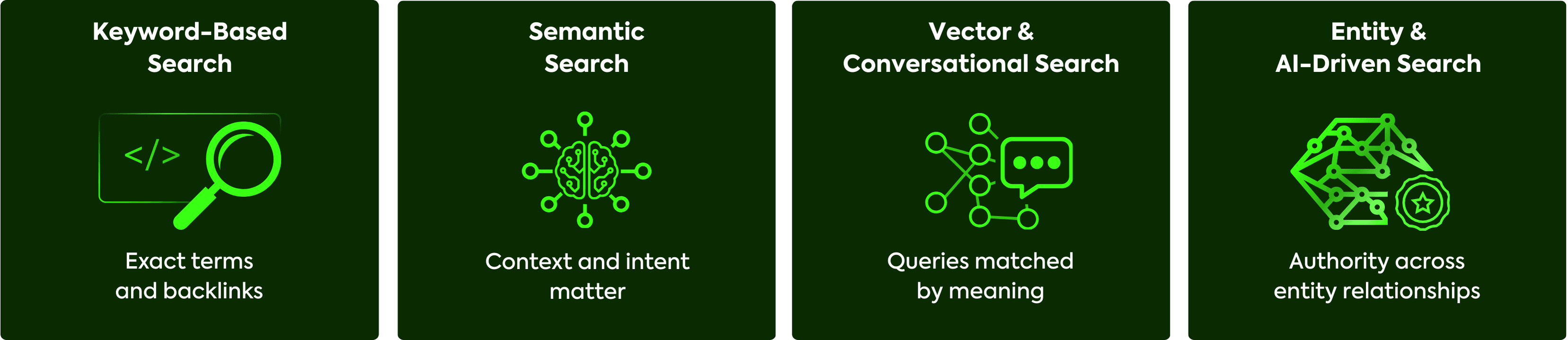
The evolution of search technology continues to accelerate, with artificial intelligence playing an increasingly central role in how search engines understand and rank content. Google's integration of BERT, MUM (Multitask Unified Model), and more recently, generative AI features into search algorithms represents a fundamental shift toward semantic understanding. These systems can comprehend context, interpret nuanced queries, and recognize when content genuinely addresses user intent rather than just matching keywords. For SEO professionals, this evolution makes topical authority and semantic clustering more important than ever.
Emerging technologies like vector search and semantic embeddings are transforming how search engines match queries to content. Instead of relying primarily on keyword matching and link analysis, next-generation search algorithms convert both queries and content into high-dimensional vector representations, then use mathematical similarity measures to determine relevance. This approach allows search engines to understand that "affordable digital cameras for beginners" and "budget-friendly photography gear for novices" are semantically equivalent even though they share minimal word overlap. For content creators, this means focusing on comprehensively addressing topics rather than keyword density.
The rise of conversational AI and voice search continues to reshape search behavior and query patterns. As users become more comfortable asking questions in natural language rather than typing keyword phrases, search queries are becoming longer, more specific, and more conversational. This trend reinforces the value of cluster-based content strategies that address comprehensive question sets rather than isolated keywords. Content optimized for featured snippets, People Also Ask boxes, and voice search responses increasingly outperforms traditional keyword-optimized pages in driving organic visibility.
Looking ahead, the integration of large language models into search experiences will likely accelerate the importance of entity-based SEO and knowledge graph optimization. Search engines are building massive knowledge graphs that understand relationships between entities (people, places, concepts, organizations) and use these relationships to interpret queries and content. Successful SEO strategies will need to ensure that content clearly establishes entity relationships and positions your brand or website as an authoritative source for specific entity clusters. This represents another dimension of topical authority that extends beyond traditional keyword optimization.
Common Challenges and How to Overcome Them
While AI-powered keyword clustering offers powerful advantages, implementation often presents obstacles that can derail strategy execution. Understanding these challenges and their solutions helps ensure successful deployment:
- Challenge: Keyword Cannibalization in Existing Content. When you already have multiple pages targeting similar keywords, clustering analysis often reveals unintentional competition between your own pages. Solution: Conduct a content consolidation audit, merging weaker pages into stronger ones through 301 redirects, or clearly differentiate pages by refining their focus to address distinct search intents within the broader topic. Use Search Console data to identify which pages Google already prefers for specific queries, then align your strategy accordingly.
- Challenge: Resource Constraints for Comprehensive Coverage. Building complete cluster architecture requires significant content creation resources that smaller teams may lack. Solution: Prioritize clusters based on business impact and competitive opportunity rather than attempting comprehensive coverage immediately. Start with 2 to 3 high-priority pillar topics, build out their supporting clusters completely, and expand systematically as resources allow. This focused approach delivers better results than thinly covering many topics.
- Challenge: Mixed Search Intent Within Clusters. Automated clustering sometimes groups keywords with different search intents (informational, commercial, transactional) together because they have SERP overlap. Solution: Manually review clusters for intent consistency, using SERP analysis to verify whether top-ranking pages are blogs, category pages, product pages, or mixed types. Split clusters with mixed intent into separate groups, or create content that serves multiple intents if SERP analysis shows this approach works for your target keywords.
- Challenge: Difficulty Measuring Cluster Performance. Traditional keyword rank tracking becomes complex when single pages target dozens of related keywords within a cluster. Solution: Implement cluster-level performance tracking that measures aggregate metrics like total cluster impressions, average cluster position, and cluster traffic contribution. Tools like SEMrush and Ahrefs now offer position tracking groups that make this analysis easier. Focus on whether the overall cluster improves rather than obsessing over individual keyword rankings.
- Challenge: Maintaining Content Freshness Across Large Clusters. As cluster architecture grows, keeping all content current and comprehensive becomes increasingly difficult. Solution: Implement a tiered maintenance schedule where pillar pages receive quarterly updates, high-performing cluster content gets semi-annual reviews, and lower-priority cluster pages receive annual updates. Use content decay monitoring tools to identify pages losing rankings or traffic, prioritizing those for refresh efforts regardless of scheduled timing.
Real-World Results and Performance Metrics
The theoretical benefits of AI-powered keyword clustering translate into measurable business outcomes when implemented effectively. Organizations across industries have documented significant improvements in organic search performance after adopting cluster-based content strategies. A comprehensive case study from MarketMuse examined 50 companies that implemented topic cluster models over 12-month periods, finding an average organic traffic increase of 47 percent compared to 14 percent for control groups using traditional keyword targeting. More importantly, the clustered approach generated 38 percent more conversions from organic traffic, suggesting that topically organized content better matches user intent and guides visitors toward conversion actions.
The financial services sector provides particularly compelling evidence for clustering effectiveness. A mid-sized insurance comparison website restructured their content architecture around 12 pillar topics, each supported by 15 to 25 cluster pages addressing specific insurance types, coverage questions, and comparison queries. Within six months, they observed a 73 percent increase in organic sessions and a 61 percent improvement in average session duration, indicating that users found the clustered content more valuable and comprehensive. Their conversion rate from organic traffic improved by 29 percent, which they attributed to better alignment between user search intent and content organization.
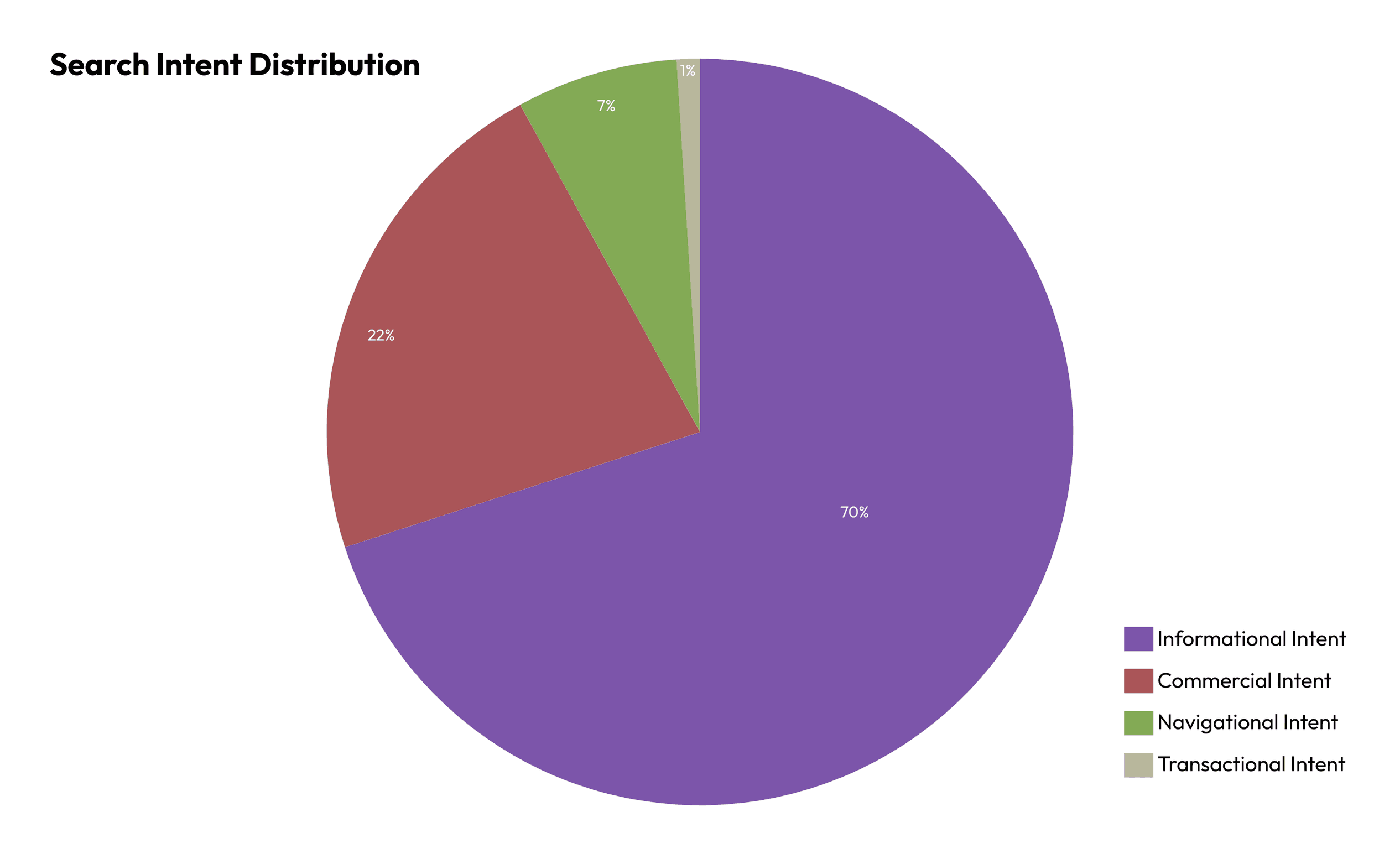
Distribution of Search Intent Across All Keyword Queries (SE Ranking, 2025)
This pie chart reveals critical insights about search intent distribution across all keyword queries, based on comprehensive data from SE Ranking's 2025 analysis of global search patterns. The overwhelming dominance of informational intent at 70 percent demonstrates that the majority of searches are driven by users seeking knowledge, answers, and educational content rather than immediate purchases. This finding has profound implications for keyword clustering strategy: successful content architectures must prioritize comprehensive informational content that addresses user questions thoroughly.
Commercial intent queries represent 22 percent of all searches, indicating a substantial audience in the research and comparison phase of their journey. These users are evaluating options, comparing solutions, and building purchase consideration. Keyword clusters targeting this segment should focus on comparison content, product reviews, feature analyses, and buying guides. Navigational queries account for 7 percent, representing users searching for specific brands or websites, while transactional queries comprise just 1 percent, reflecting the small proportion of searches with immediate purchase intent.
Understanding this distribution helps optimize your cluster architecture by allocating content resources appropriately. Since informational intent dominates, your pillar pages and the majority of cluster content should address educational topics, how-to guides, and comprehensive topic overviews. This aligns perfectly with topical authority strategies, as building expertise through informational content creates the foundation for converting commercial and transactional searches. The data justifies investing heavily in informational cluster content while strategically incorporating commercial comparison content to capture users moving through the consideration phase.
Real-World E‑commerce Impact and Strategic Insights
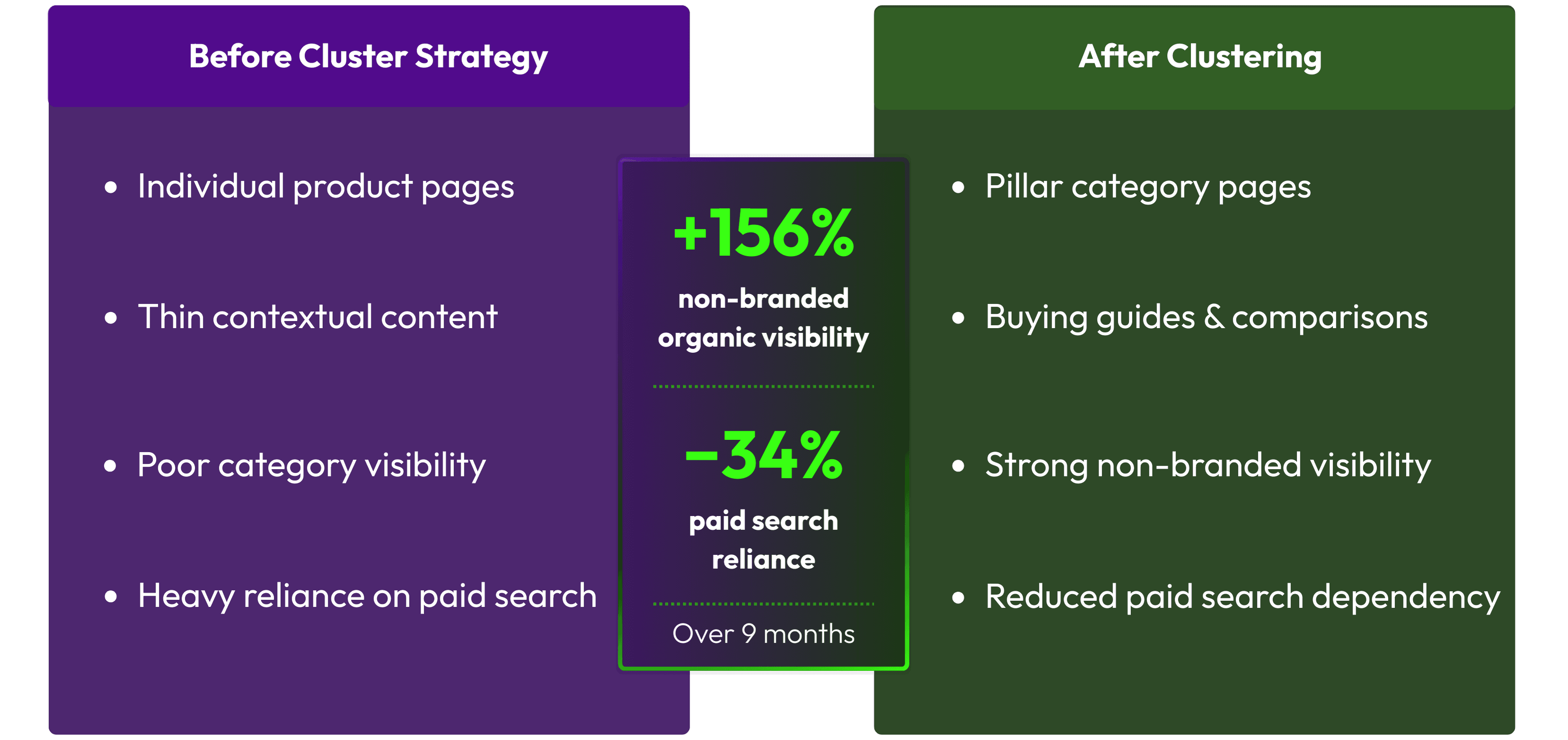
E-commerce implementations reveal how clustering strategies can address the unique challenges of large product catalogs. An outdoor equipment retailer with 15,000 SKUs previously maintained individual product pages with minimal contextual content, resulting in poor rankings for category-level and informational queries. They implemented a cluster strategy that created comprehensive category pages (pillars) linked to detailed buying guides, comparison articles, and how-to content (clusters), with product pages linking into the relevant cluster content. This restructuring increased their organic visibility for non-branded queries by 156 percent over nine months and reduced their dependence on paid search advertising by 34 percent, generating substantial cost savings alongside revenue growth.
The performance metrics that matter most when evaluating clustering effectiveness extend beyond simple ranking improvements. Track the growth in topical visibility by monitoring how many related keywords within each cluster appear in top 10, top 20, and top 50 positions over time. Measure the efficiency of your content investment by calculating how many keyword rankings each piece of cluster content generates compared to traditional single-keyword-focused pages. Monitor the quality signals like time on page, pages per session, and bounce rate for cluster content versus non-clustered content. Analyze the internal link equity flow to understand which pillar pages effectively distribute authority to cluster content and which need architectural improvements.
The competitive intelligence dimension of clustering analysis provides strategic advantages that transcend immediate ranking improvements. By analyzing how competitors organize their topical coverage and identifying gaps in their cluster architecture, you can discover untapped opportunities where you can establish authority before larger competitors notice the gaps. Tools like Ahrefs' Content Gap and SEMrush's Topic Research enable systematic competitor cluster analysis, revealing which subtopics within your broader topic areas receive insufficient coverage across the competitive landscape. These gaps represent the highest-probability opportunities for quick wins and sustainable competitive advantage.
As artificial intelligence continues reshaping search engine technology and user behavior, keyword clustering and topic modeling have evolved from experimental tactics to foundational elements of effective SEO strategy. The organizations achieving the most significant results from these approaches share common characteristics: they commit to comprehensive topical coverage rather than superficial keyword targeting, they invest in content quality and depth rather than quantity, and they view clustering as an ongoing strategic framework rather than a one-time project. For SEO professionals willing to embrace these principles and leverage the powerful AI tools now available, keyword clustering offers a clear path to sustainable organic growth in an increasingly competitive search landscape. The data demonstrates that this approach works, the tools make it accessible, and the evolution of search algorithms ensures it will only become more important in the years ahead.